
Selling Your House During Divorce in North Carolina
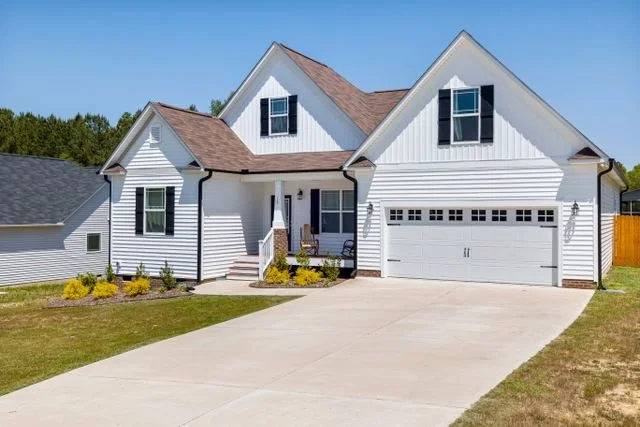
Do you have to sell your house if you're getting divorced in North Carolina?
No, not automatically. The house is treated as property to be divided fairly between you and your spouse, and selling is only one way to do that. You can also have one spouse buy out the other's share, or agree to keep the house for now.
If you're reading this in the middle of it, the house probably feels like the one thing that has to get sorted out before anything else can move forward. That's a fair read of the situation. It's usually the biggest asset either of you owns, and it's tied up with where the kids sleep, who's paying the mortgage next month, and whether either of you can actually afford to stay. There isn't one right answer here. There's the answer that fits your specific situation, and we'll walk through how to find it.
Who actually decides what happens to the house?
North Carolina divides marital property under what's called equitable distribution. That's different from a community-property state, where everything usually gets split straight down the middle. In North Carolina, the starting point leans toward an equal split, but a judge can weigh a number of factors about your marriage and land somewhere else if equal doesn't turn out to be fair.
Here's the part most people don't expect: whose name is on the deed doesn't decide this. If you bought the house together during the marriage, it's generally treated as shared property no matter who signed the paperwork. Even if one spouse owned the home before the marriage, the other spouse may still have a claim on however much the home's value grew while marital money was going toward the mortgage.
One more thing worth knowing early: in North Carolina, a claim to divide the house has to be raised as part of the divorce itself, before the final divorce judgment is entered. It isn't something you can circle back to afterward. If you're not sure where you stand on this, that's a conversation for a family law attorney, not something to guess at.
What are your actual options besides selling right away?
Every situation we've seen falls into roughly one of these buckets:
You both want out. Neither of you wants the house, and selling and splitting the money is the cleanest path forward.
One of you wants to keep it, one wants out. This usually means a buyout, where the spouse staying refinances the mortgage into their name alone and pays the other their share of the equity.
Neither of you can afford it alone. The mortgage, taxes, and upkeep were built around two incomes, and one income can't carry it. Selling is often the realistic answer here, even if it's not the one either of you wanted first.
You haven't agreed on anything yet. This is the hardest bucket, and it's the one where getting a neutral read on the property's actual condition and value helps the most, before emotions decide the outcome instead of facts.
Here's how those options actually stack up against each other:
Co-owning after divorce works for some families for a while. It also means you're still financially tied to someone you're no longer married to, which is worth sitting with honestly before you agree to it.
What happens to the money when you do sell?
If you sell, the mortgage gets paid off first, straight out of the sale proceeds. Then closing costs, agent fees, and anything else owed against the property come out. Whatever's left is the actual equity, and that's what gets divided between you, either by your written agreement or by the court's order.
This is also where a lot of divorcing sellers get surprised: the number you had in your head from a home value estimate online is rarely the number that shows up at closing. A real evaluation of the property's actual condition, not a guess, is what protects both of you from a number that doesn't hold up once a buyer's inspector walks through it.
Timing matters here too, and not just for practical reasons. Homeownership status shifts a lot after divorce. Harvard's Joint Center for Housing Studies has reported that homeownership rates among divorced adults sit well below those of married couples, meaning a large share of people who owned a home while married don't keep that same home, or homeownership at all, once the divorce is final. That's not a reason to panic. It's a reason to make the sell-or-keep decision deliberately, with real numbers in front of you, instead of by default.
What about taxes and timing?
The tax treatment of a home sale can genuinely change depending on whether you sell before or after the divorce is finalized, and depending on how the proceeds get split. This is one of those spots where we won't hand you a number, because the real answer depends on your filing status, how long you owned the home, and details specific to your return. A CPA can walk through your actual numbers and tell you what the sale means for your taxes. We'll point you there directly if you don't already have one.
What does working with Bustan actually look like?
Our team brings close to twenty years of construction and renovation experience, plus a licensed North Carolina Realtor with an NAR Short Sale and Foreclosure Resource (SFR®) certification. When a house is part of a divorce, we treat it like what it is: a shared decision between two people who may not agree on much else right now, and a property that has to sell for what it's actually worth so both of you get a fair outcome.
If listing the house on the open market gets you and your spouse the best price, we'll tell you that. If a faster, more private sale actually serves both of you better, given timing, condition, or how much either of you can put into getting it market-ready, we'll lay that out honestly too. What we won't do is push a path that's easier for us over the one that's actually fair to both of you.
If you're trying to figure out what happens to your house, the next step is a conversation, not a commitment. Walk us through where things stand, together or separately. We'll tell you plainly what we'd do in your position.
One more honest note: this article explains how the general process works, not legal or tax advice for your specific situation. A family law attorney and a CPA are the right people to walk through your decree, your numbers, and your options in detail, and we'll point you there directly alongside anything Bustan can help with.
ABOUT BUSTAN SOLUTIONS
Our team includes a licensed North Carolina Realtor and NAR-certified Short Sale and Foreclosure Resource (SFR®) specialist with nearly 20 years of hands-on renovation and construction experience, serving homeowners across the NC Triad and Triangle.
